
Counter-UAS Systems
UAS against UAS · Layered interception · Kinetic kill
UAS against UAS
The low-altitude threat is now a spectrum: from 100 km/h FPVs to 900 km/h turbojet loitering munitions, up to strategic ISR-strike UAVs at 10,000 m. No single countermeasure covers all of it, so counter-UAS has to be a system.
The C2 system assigns FW-series interceptors by target range and speed. Kinetic destruction does not depend on the threat's data link and is equally effective against INS-guided or pre-programmed-waypoint targets.
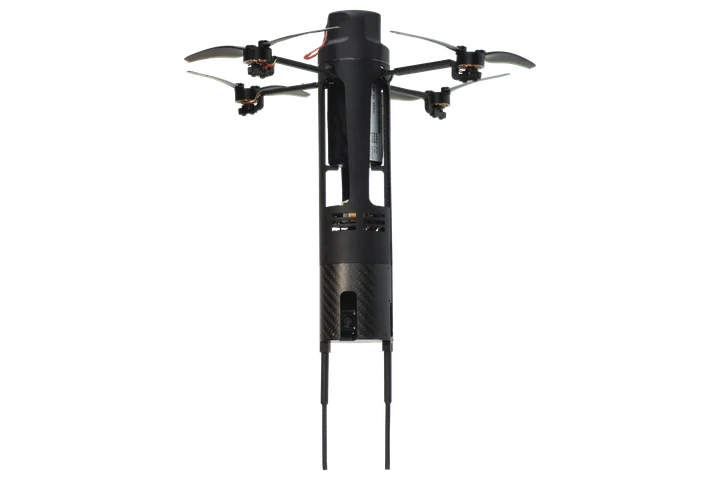
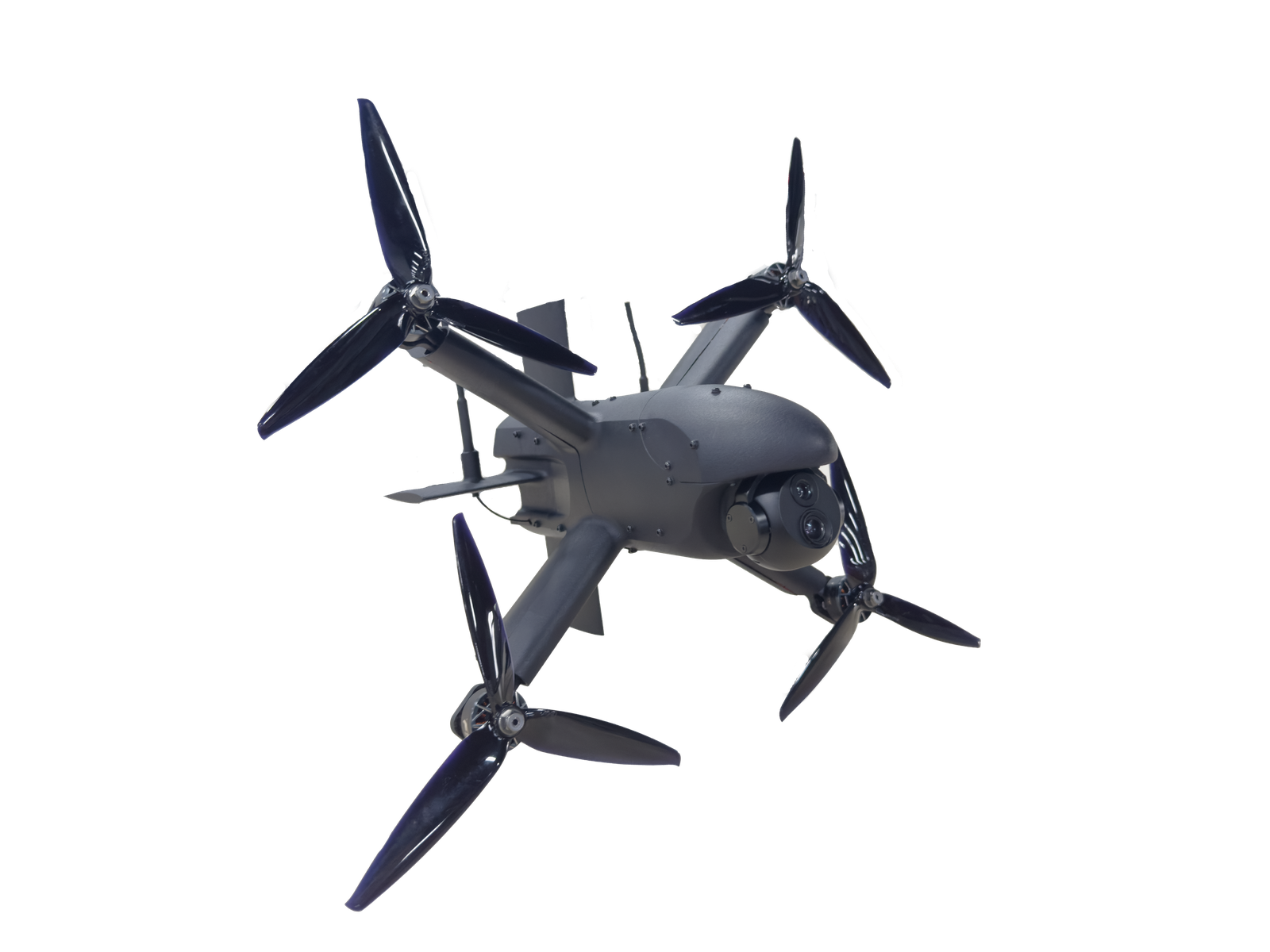
Rotor Interceptor
Squad-level short-range terminal interceptor. Quad-rotor with aerodynamic shaping, high-speed approach, optical terminal lock-on and proximity-fuzed kill.
Key features
- Quad-rotor with aerodynamic shaping, peak speed up to 180 km/h
- Semi-autonomous and fully autonomous mission modes
- Carries a swarm controller for rapid group tactics
- Man-packable; six aircraft intercept as one group
Target set
- Guidance
- GNSS-aided navigation plus EO/IR terminal guidance
- Fuze
- Proximity fuze primary, kinetic impact secondary
- Deployment
- Man-packed / vehicle-mounted, six aircraft cooperating
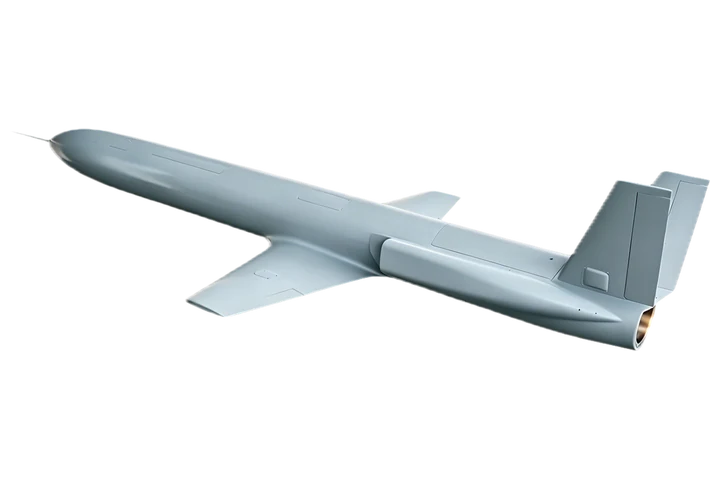
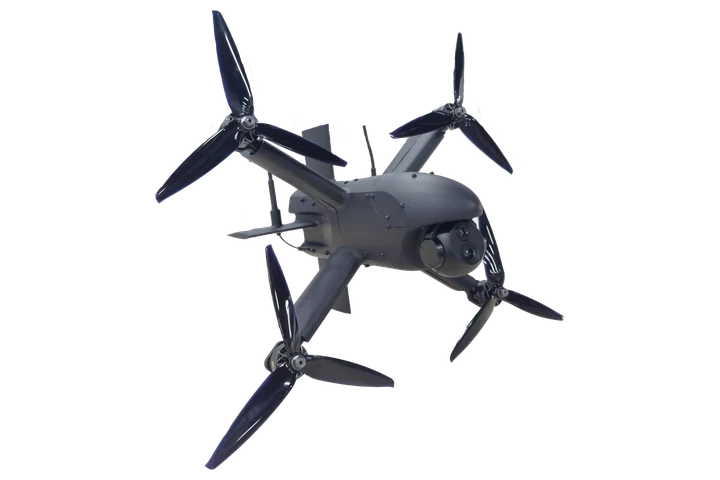
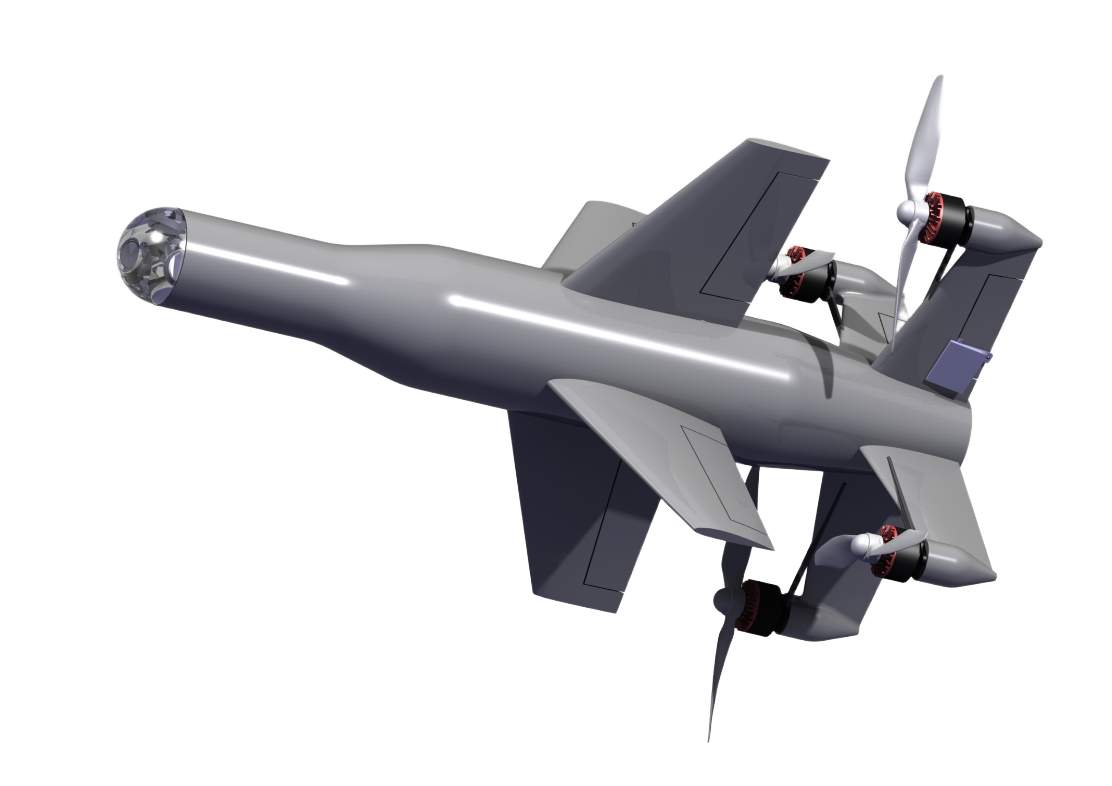
Compound-Wing Loitering Munition
Short-range high-speed interceptor. Rotary-wing vertical launch with compound-wing high-speed cruise, built against one-way attack drones such as Shahed-136.
Key features
- Rotary-wing vertical launch with compound-wing high-speed cruise
- Electric propulsion, quiet with a low IR signature
- Tube or box launch for rapid employment, multi-aircraft groups
- Combines VTOL flexibility with fixed-wing speed
Target set
- Guidance
- GNSS-aided navigation plus optical terminal guidance
- Fuze
- Proximity fuze
- Launch method
- Tube / box rapid launch, supports saturation interception
System advantages
Kinetic kill, assured damage
Proximity or impact destruction is definitive and irreversible. Independent of the threat's data link, it works against INS-guided and pre-programmed targets alike.
Two types, layered interception
FW330 and FW730 hand over from 4 km out to 5 km; the C2 system assigns the interceptor type by target range and speed.
Composite guidance, precise and affordable
Radar cueing at range plus onboard high-resolution imaging for terminal lock-on and proximity detonation. Cost per interception is far below that of an air-defence missile, so attrition is sustainable.
Kill chain
Detect — solve — intercept — assess, fully automatic.
Beyond-line-of-sight multi-target detection
A four-face radar array scans several inbound groups at once, providing bearing, speed and track data.
Intercept solution and interceptor assignment
Interceptor type is matched to target range and speed, the intercept track is loaded, and EO assists identification inside visual range.
Imaging lock-on and precision strike
The interceptor reaches the intercept zone, its onboard high-resolution imaging seeker locks on autonomously, and the warhead detonates by proximity fuze.
Damage assessment and re-engagement
Radar keeps scanning to confirm the result and EO assesses the damage; targets still intact are automatically assigned a second strike.
Layered deployment scenarios
Mobile escort air defence
FW330 · ≤4km- Man-packed by the squad, set up in 3 minutes
- Intercepts FPV and rotary-wing UAVs
- Last-ditch terminal defence for small and medium naval vessels against saturation attack
Forward position protection
FW730 · 5km- Rapid interception of one-way attack drones
- Tube or box launch, multi-aircraft groups against salvos
- Close-in gap filling against fixed-wing targets at 300 km/h and below
Unlike soft kill such as electronic jamming, which may not work, and unlike traditional air-defence missiles, which cannot be expended at this rate, this is a third path for counter-UAS.